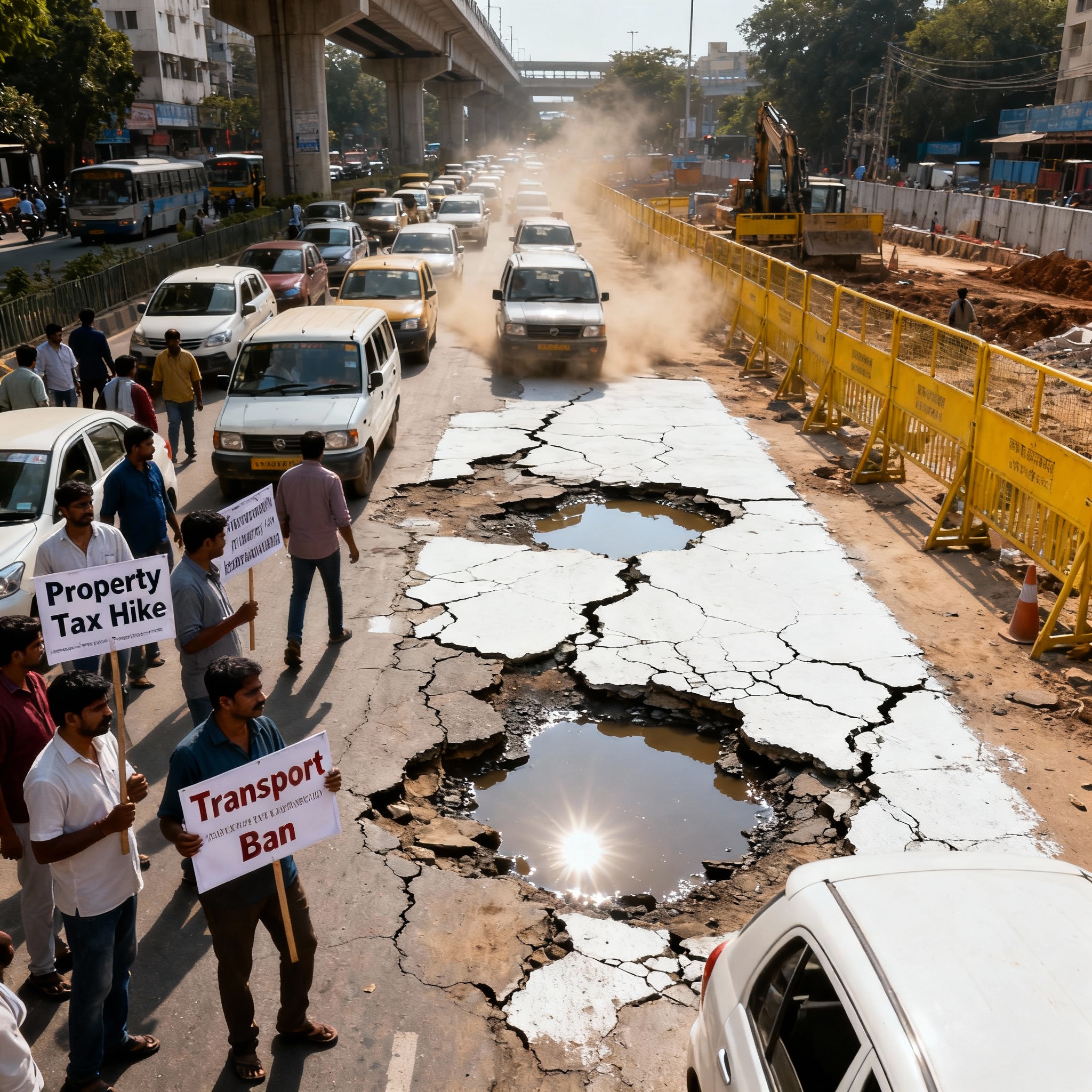
 The Congress-led Karnataka government has been criticized for poor coordination among agencies like BBMP and metro authorities, resulting in inefficient infrastructure management. This has exacerbated congestion and limited alternate routes, damaging public trust in governance.
Adding to the burden, property taxes in Bengaluru have sharply increased by 25-30% in 2025, with additional user fees on waste collection approved by the government. These hikes, perceived as unjustified amidst inadequate services, have shocked homeowners facing rising living costs. Bulk waste generators and larger properties face even higher fees, further increasing financial pressure.
Transportation restrictions such as bike, taxi, and car polling bans have also raised questions about the government's rationale, as citizens struggle to find viable commuting options during ongoing construction chaos.
Residents express that despite repeated government promises, real problems remain unaddressed. Political statements often focus on blame games rather than constructive solutions, causing public anger and disillusionment. Many people wonder how they can sustain their livelihoods amid worsening infrastructure and increased taxes.
To restore public trust and ease daily hardships, experts call for better project coordination, quality control in road repairs, transparent communication, and relief for taxpayers. Immediate action is essential to balance infrastructure development with citizen welfare, ensuring Bengaluru’s transformation does not come at the cost of its people’s quality of life.
The Congress-led Karnataka government has been criticized for poor coordination among agencies like BBMP and metro authorities, resulting in inefficient infrastructure management. This has exacerbated congestion and limited alternate routes, damaging public trust in governance.
Adding to the burden, property taxes in Bengaluru have sharply increased by 25-30% in 2025, with additional user fees on waste collection approved by the government. These hikes, perceived as unjustified amidst inadequate services, have shocked homeowners facing rising living costs. Bulk waste generators and larger properties face even higher fees, further increasing financial pressure.
Transportation restrictions such as bike, taxi, and car polling bans have also raised questions about the government's rationale, as citizens struggle to find viable commuting options during ongoing construction chaos.
Residents express that despite repeated government promises, real problems remain unaddressed. Political statements often focus on blame games rather than constructive solutions, causing public anger and disillusionment. Many people wonder how they can sustain their livelihoods amid worsening infrastructure and increased taxes.
To restore public trust and ease daily hardships, experts call for better project coordination, quality control in road repairs, transparent communication, and relief for taxpayers. Immediate action is essential to balance infrastructure development with citizen welfare, ensuring Bengaluru’s transformation does not come at the cost of its people’s quality of life. Bengaluru’s Infrastructure Crisis and Rising Taxes: A Growing Public Concern
Bengaluru grapples with prolonged infrastructure disruptions from metro and road projects, coupled with steep property tax hikes and transportation restrictions, prompting rising public discontent.
Bengaluru's residents face significant challenges as years-long metro construction and delayed white-topping road projects disrupt daily commute and economic activities. Despite a Rs 4,000 crore investment in white-topping aimed at durable roads, many repairs deteriorate quickly. Meanwhile, political leaders often engage in blaming previous governments instead of addressing current issues, fueling public frustration.
The Congress-led Karnataka government has been criticized for poor coordination among agencies like BBMP and metro authorities, resulting in inefficient infrastructure management. This has exacerbated congestion and limited alternate routes, damaging public trust in governance.
Adding to the burden, property taxes in Bengaluru have sharply increased by 25-30% in 2025, with additional user fees on waste collection approved by the government. These hikes, perceived as unjustified amidst inadequate services, have shocked homeowners facing rising living costs. Bulk waste generators and larger properties face even higher fees, further increasing financial pressure.
Transportation restrictions such as bike, taxi, and car polling bans have also raised questions about the government's rationale, as citizens struggle to find viable commuting options during ongoing construction chaos.
Residents express that despite repeated government promises, real problems remain unaddressed. Political statements often focus on blame games rather than constructive solutions, causing public anger and disillusionment. Many people wonder how they can sustain their livelihoods amid worsening infrastructure and increased taxes.
To restore public trust and ease daily hardships, experts call for better project coordination, quality control in road repairs, transparent communication, and relief for taxpayers. Immediate action is essential to balance infrastructure development with citizen welfare, ensuring Bengaluru’s transformation does not come at the cost of its people’s quality of life.
The Congress-led Karnataka government has been criticized for poor coordination among agencies like BBMP and metro authorities, resulting in inefficient infrastructure management. This has exacerbated congestion and limited alternate routes, damaging public trust in governance.
Adding to the burden, property taxes in Bengaluru have sharply increased by 25-30% in 2025, with additional user fees on waste collection approved by the government. These hikes, perceived as unjustified amidst inadequate services, have shocked homeowners facing rising living costs. Bulk waste generators and larger properties face even higher fees, further increasing financial pressure.
Transportation restrictions such as bike, taxi, and car polling bans have also raised questions about the government's rationale, as citizens struggle to find viable commuting options during ongoing construction chaos.
Residents express that despite repeated government promises, real problems remain unaddressed. Political statements often focus on blame games rather than constructive solutions, causing public anger and disillusionment. Many people wonder how they can sustain their livelihoods amid worsening infrastructure and increased taxes.
To restore public trust and ease daily hardships, experts call for better project coordination, quality control in road repairs, transparent communication, and relief for taxpayers. Immediate action is essential to balance infrastructure development with citizen welfare, ensuring Bengaluru’s transformation does not come at the cost of its people’s quality of life.