 Prime Minister Narendra Modi recently met Qualcomm CEO Cristiano Amon to discuss advancements in India’s artificial intelligence and semiconductor sectors, aligning tech innovation with U.S. partnerships. Google also announced a $15 billion investment to establish an AI hub in Visakhapatnam in collaboration with the Adani Group.
Meanwhile, Pakistan and Afghanistan faced one of their deadliest border conflicts in years. According to reports, on October 9, 2025, Pakistan executed major airstrikes in Kabul, Khost, and Jalalabad, targeting Tehreek-i-Taliban Pakistan (TTP) hideouts, which triggered an intense Taliban counterattack two days later. The Afghan Taliban claimed to have killed 58 Pakistani soldiers and captured over 25 Pakistani border posts, though Islamabad disputes these figures, asserting that more than 200 Taliban fighters were neutralized.
By October 15, 2025, the Pakistani Air Force had carried out additional strikes in Kandahar’s Spin Buldak region, resulting in at least 15 civilian deaths and extensive damage to Taliban infrastructure. The Taliban declared a symbolic victory by seizing a Pakistani tank, while Pakistan reinforced its border defenses.
Following these escalations, international pressure—particularly from Qatar and Saudi Arabia—prompted a 48-hour ceasefire agreement between Pakistan and the Taliban on October 15. This truce came after days of cross-border shelling that killed dozens of fighters and civilians, disrupting fragile regional stability.
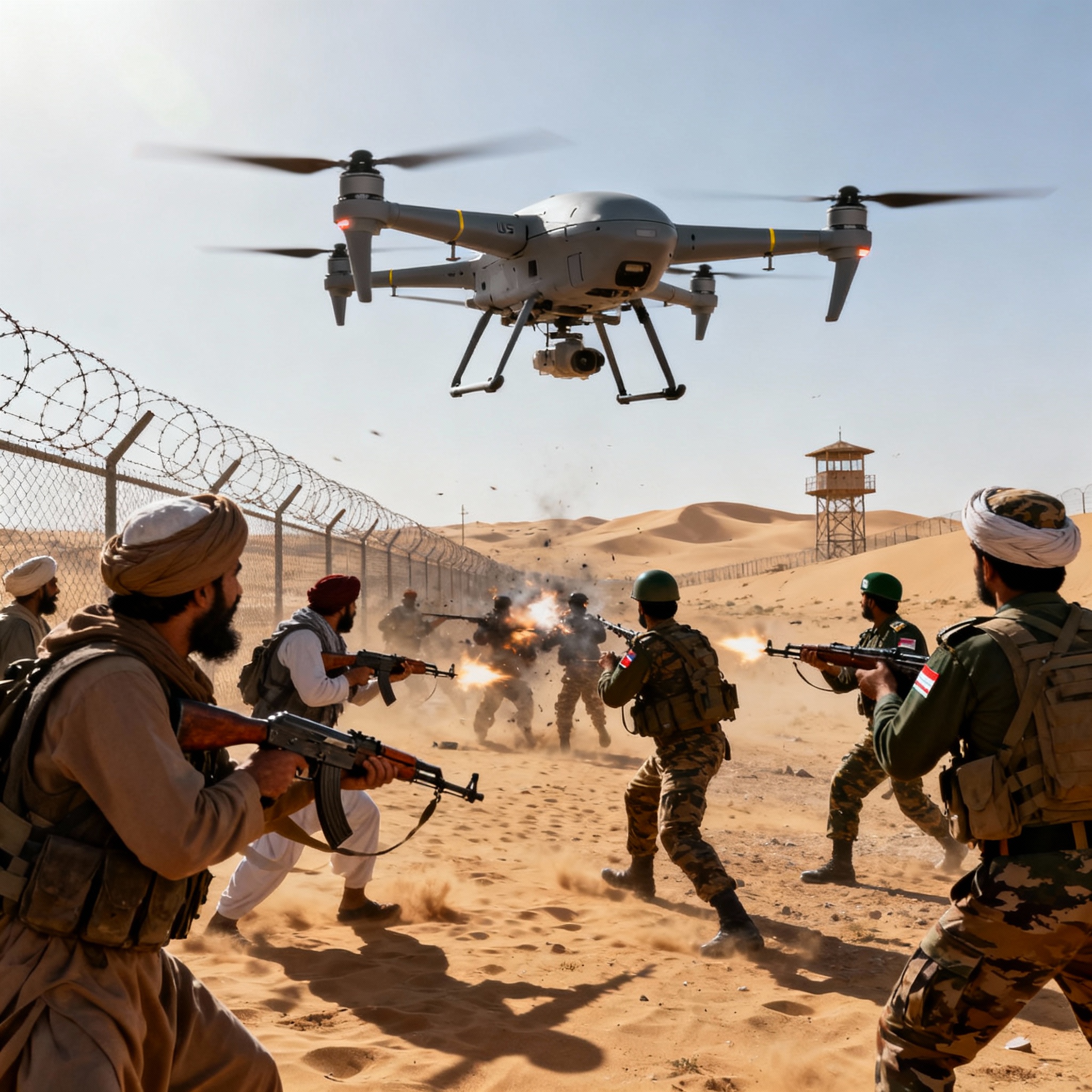
The United States has maintained aerial surveillance over southern Afghanistan using MQ-9 Reaper drones to monitor the confrontation and ensure American interests in the region remain secured. Washington has avoided direct involvement but emphasized that Pakistan and the Taliban must adhere to the ceasefire to prevent wider unrest.
Overall, the unfolding events have shifted the geopolitical landscape. While India continues bolstering technological ties with the U.S. and strengthening domestic economic resilience, Pakistan remains entangled in security challenges that risk destabilizing the border region. The situation remains fluid as both nations eye international mediation options if conflict reignites.
Prime Minister Narendra Modi recently met Qualcomm CEO Cristiano Amon to discuss advancements in India’s artificial intelligence and semiconductor sectors, aligning tech innovation with U.S. partnerships. Google also announced a $15 billion investment to establish an AI hub in Visakhapatnam in collaboration with the Adani Group.
Meanwhile, Pakistan and Afghanistan faced one of their deadliest border conflicts in years. According to reports, on October 9, 2025, Pakistan executed major airstrikes in Kabul, Khost, and Jalalabad, targeting Tehreek-i-Taliban Pakistan (TTP) hideouts, which triggered an intense Taliban counterattack two days later. The Afghan Taliban claimed to have killed 58 Pakistani soldiers and captured over 25 Pakistani border posts, though Islamabad disputes these figures, asserting that more than 200 Taliban fighters were neutralized.
By October 15, 2025, the Pakistani Air Force had carried out additional strikes in Kandahar’s Spin Buldak region, resulting in at least 15 civilian deaths and extensive damage to Taliban infrastructure. The Taliban declared a symbolic victory by seizing a Pakistani tank, while Pakistan reinforced its border defenses.
Following these escalations, international pressure—particularly from Qatar and Saudi Arabia—prompted a 48-hour ceasefire agreement between Pakistan and the Taliban on October 15. This truce came after days of cross-border shelling that killed dozens of fighters and civilians, disrupting fragile regional stability.
The United States has maintained aerial surveillance over southern Afghanistan using MQ-9 Reaper drones to monitor the confrontation and ensure American interests in the region remain secured. Washington has avoided direct involvement but emphasized that Pakistan and the Taliban must adhere to the ceasefire to prevent wider unrest.
Overall, the unfolding events have shifted the geopolitical landscape. While India continues bolstering technological ties with the U.S. and strengthening domestic economic resilience, Pakistan remains entangled in security challenges that risk destabilizing the border region. The situation remains fluid as both nations eye international mediation options if conflict reignites. India-Pakistan Border Tensions Escalate, Taliban Conflict Sparks U.S. Response
In mid-October 2025, South Asia witnessed a dangerous escalation in tensions as Pakistan and Afghanistan engaged in deadly border clashes involving Taliban forces, while India pursued high-level diplomatic and economic initiatives with global partners, including renewed U.S. cooperation.
India entered the second half of October 2025 with intense diplomatic activity and regional instability unfolding nearby.
Prime Minister Narendra Modi recently met Qualcomm CEO Cristiano Amon to discuss advancements in India’s artificial intelligence and semiconductor sectors, aligning tech innovation with U.S. partnerships. Google also announced a $15 billion investment to establish an AI hub in Visakhapatnam in collaboration with the Adani Group.
Meanwhile, Pakistan and Afghanistan faced one of their deadliest border conflicts in years. According to reports, on October 9, 2025, Pakistan executed major airstrikes in Kabul, Khost, and Jalalabad, targeting Tehreek-i-Taliban Pakistan (TTP) hideouts, which triggered an intense Taliban counterattack two days later. The Afghan Taliban claimed to have killed 58 Pakistani soldiers and captured over 25 Pakistani border posts, though Islamabad disputes these figures, asserting that more than 200 Taliban fighters were neutralized.
By October 15, 2025, the Pakistani Air Force had carried out additional strikes in Kandahar’s Spin Buldak region, resulting in at least 15 civilian deaths and extensive damage to Taliban infrastructure. The Taliban declared a symbolic victory by seizing a Pakistani tank, while Pakistan reinforced its border defenses.
Following these escalations, international pressure—particularly from Qatar and Saudi Arabia—prompted a 48-hour ceasefire agreement between Pakistan and the Taliban on October 15. This truce came after days of cross-border shelling that killed dozens of fighters and civilians, disrupting fragile regional stability.
The United States has maintained aerial surveillance over southern Afghanistan using MQ-9 Reaper drones to monitor the confrontation and ensure American interests in the region remain secured. Washington has avoided direct involvement but emphasized that Pakistan and the Taliban must adhere to the ceasefire to prevent wider unrest.
Overall, the unfolding events have shifted the geopolitical landscape. While India continues bolstering technological ties with the U.S. and strengthening domestic economic resilience, Pakistan remains entangled in security challenges that risk destabilizing the border region. The situation remains fluid as both nations eye international mediation options if conflict reignites.
Prime Minister Narendra Modi recently met Qualcomm CEO Cristiano Amon to discuss advancements in India’s artificial intelligence and semiconductor sectors, aligning tech innovation with U.S. partnerships. Google also announced a $15 billion investment to establish an AI hub in Visakhapatnam in collaboration with the Adani Group.
Meanwhile, Pakistan and Afghanistan faced one of their deadliest border conflicts in years. According to reports, on October 9, 2025, Pakistan executed major airstrikes in Kabul, Khost, and Jalalabad, targeting Tehreek-i-Taliban Pakistan (TTP) hideouts, which triggered an intense Taliban counterattack two days later. The Afghan Taliban claimed to have killed 58 Pakistani soldiers and captured over 25 Pakistani border posts, though Islamabad disputes these figures, asserting that more than 200 Taliban fighters were neutralized.
By October 15, 2025, the Pakistani Air Force had carried out additional strikes in Kandahar’s Spin Buldak region, resulting in at least 15 civilian deaths and extensive damage to Taliban infrastructure. The Taliban declared a symbolic victory by seizing a Pakistani tank, while Pakistan reinforced its border defenses.
Following these escalations, international pressure—particularly from Qatar and Saudi Arabia—prompted a 48-hour ceasefire agreement between Pakistan and the Taliban on October 15. This truce came after days of cross-border shelling that killed dozens of fighters and civilians, disrupting fragile regional stability.
The United States has maintained aerial surveillance over southern Afghanistan using MQ-9 Reaper drones to monitor the confrontation and ensure American interests in the region remain secured. Washington has avoided direct involvement but emphasized that Pakistan and the Taliban must adhere to the ceasefire to prevent wider unrest.
Overall, the unfolding events have shifted the geopolitical landscape. While India continues bolstering technological ties with the U.S. and strengthening domestic economic resilience, Pakistan remains entangled in security challenges that risk destabilizing the border region. The situation remains fluid as both nations eye international mediation options if conflict reignites.